
Robotics vs AI for Kids:
Which Should You Choose?
The first AI program for kids in Alicante
July camp is full · Next session: fall weekly program
The short answer
Robotics teaches kids to assemble and program robots. AI teaches kids to give instructions to machines and turn ideas into real products. Both are valuable, but AI is the foundation: a child who learns to work with AI can apply it to robots, apps, design.
Quick comparison
| Robotics | AI Kids Club | |
|---|---|---|
| What kids build | Robots from kits | Real projects that work |
| What they learn | Assemble and program hardware | Plan and direct machines |
| What they take home | The experience | Their own products |
| Applies to | Engineering | Any field |
What kids build at AI Kids Club
Pilot camp. Zero prior experience. 5 sessions.

Pixel Palace
A retro arcade with 6 games
Built by 6th graders
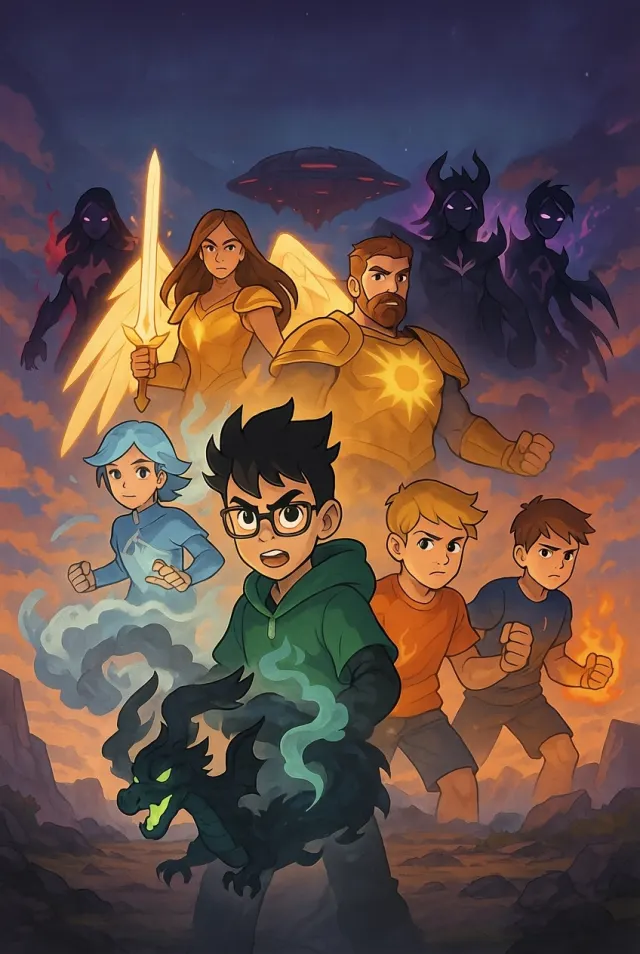
ShadowLight
A complete superhero comic book
Built by a 2nd grader

Halloween House
A 7-chapter mystery novel
Built by 4th and 5th graders
None of them knew how to code before they started.
July camp is full · Fall weekly program next
What Parents Say
AI doesn’t replace robotics. It includes it.
A child who learns to direct machines can direct any machine, including robots.
Why AI is the foundation
A head start that begins now
Every professional is learning to use AI right now. Your child can start earlier and learn it well: as a tool, not a shortcut.
The skill that applies to everything
Your child will learn to use AI the way you use the internet. Building a robot is one specific application. Working with AI is the skill underneath: directing machines to solve problems. A child with that foundation can apply it to robotics, design, science. The reverse doesn’t work the same way.
What they learn in practice
Kids learn to define a project, break it into steps, give precise instructions, and judge whether the result is good. That’s what a professional does at a tech company. No school teaches it today.

Brian Greene
Brian Greene
15+ years in education and technology. Built products at Etsy, Bumble, and Udacity used by hundreds of millions of people. Kids learn real planning, testing, and product thinking using Spark and carefully guided AI tools.


15+ years in education and technology. Built products at Etsy, Bumble, and Udacity used by hundreds of millions of people. Kids learn real planning, testing, and product thinking using Spark and carefully guided AI tools.
Frequently asked questions
What age can kids start learning AI?
From 2nd grade. We group kids by grade band: 2º–3º, 4º–6º, and ESO, so the challenge and support match their age.
Do they need to know how to code?
No. Kids learn to plan, give clear instructions, and evaluate results. Coding is one tool among many, not a prerequisite.
Is AI safe for kids?
Yes, with supervision and training. We teach responsible use: when to use AI, when not to, and how to verify what it produces. Kids learn to be critical, not dependent.
Can kids do both robotics and AI?
Yes, they complement each other. Kids who’ve done robotics adapt quickly because they already like building. And AI skills apply to robotics too.
What tools do they use?
Kids use Spark, our own supervised AI platform for creating projects, plus guided access to tools like Claude, ChatGPT, Lovable, image generators, and code editors when they fit the project.
How much does it cost?
The July Summer Camp was €250 for the week and is now full. The school-year weekly program starts in fall 2026 and is €100 per month.
What happens when AI tools change?
Tools change, skills don’t. Critical thinking, planning, problem solving. Those work with any tool, present or future.
Isn’t this just more screen time?
It’s creating, not consuming. Kids build real projects that work and can be shared at Demo Day. It’s the difference between playing piano and listening to music.
When’s the next cohort, and is there a summer option?
The July Summer Camp runs July 6–10, 9:30–13:30, at Universidad de Alicante, MiCampus, and is now full. The school-year weekly program starts in fall 2026 with weekly after-school classes at €100 per month.