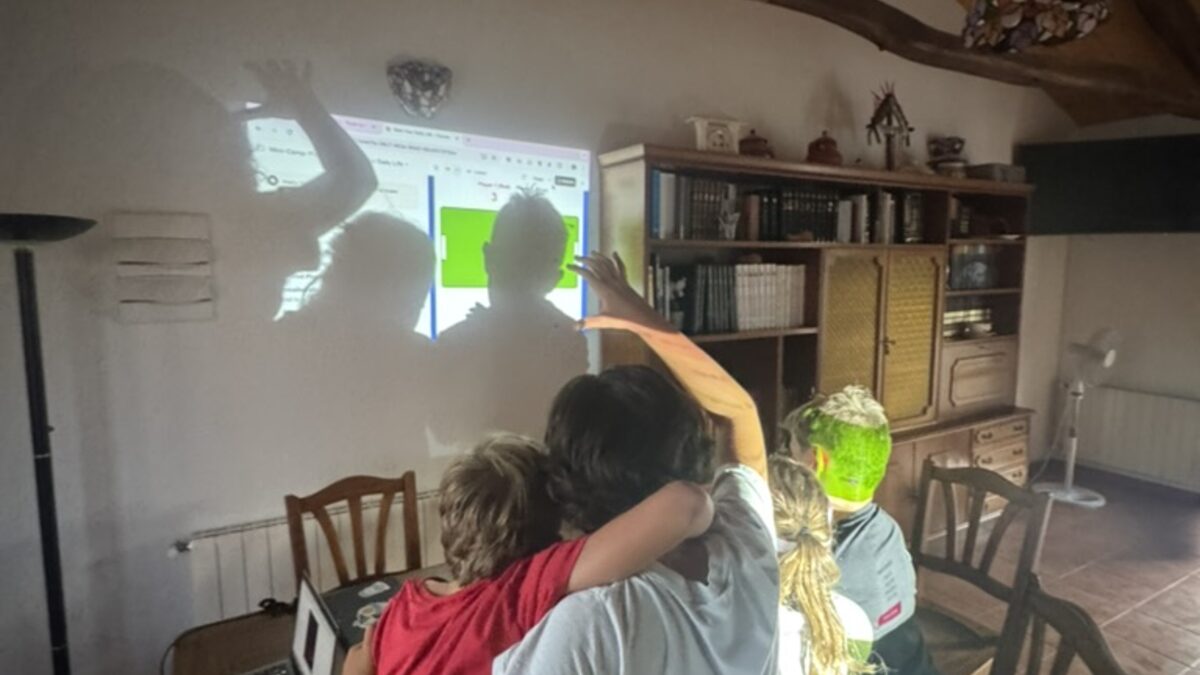
Last summer, in a pueblo in León, I ran a little camp for my kids and their cousins.
I’d had it in my head for a while. I wanted them to understand what AI actually is. Not magic, not a person, just a tool, like a calculator or a search engine, but a new kind: powerful and fast, and with no judgment of its own. Once you get that, you can use it well. You can use it responsibly, and use it to sharpen your own thinking instead of handing your thinking over to it. And that summer I finally had the time: I was working with an American team, so my mornings were free.
Five of them, the youngest seven and the oldest eleven. One hour a day, five days. That was the whole thing. It wasn’t supposed to become anything.
What happened in that room
They started with photos. Snapshots of themselves and their friends, turned into characters, comics, scenes. A seven-year-old made an entire comic, friends as the heroes, every idea his own. The older ones went further: one team built a website full of playable games and kept working on it after we’d packed up for the day.
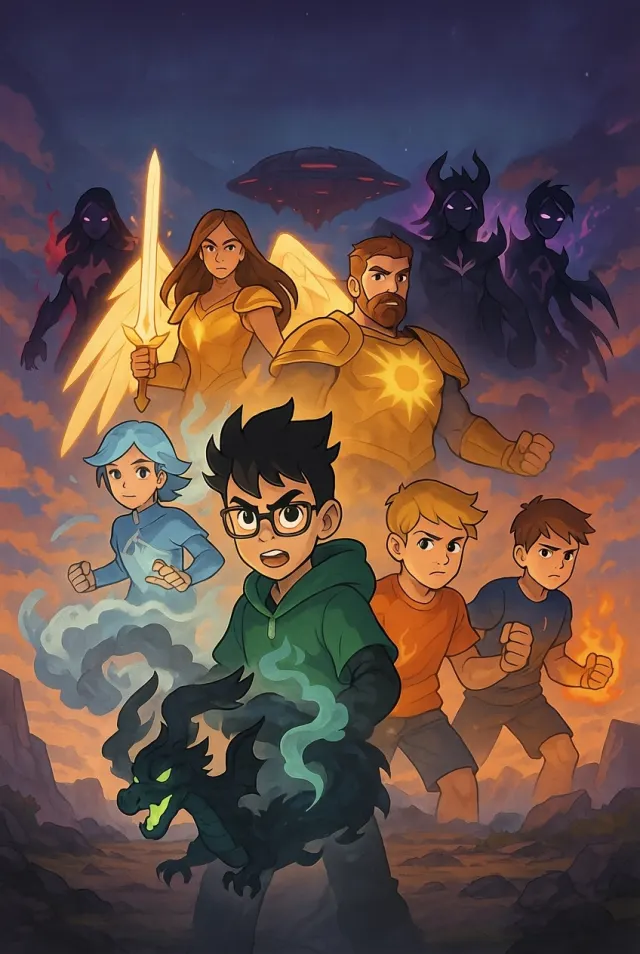
The magic was never the AI. It was watching a kid take something of their own, a photo, a drawing, a thing they’d made outside, and bring it to life. Their world, not a template.
By Friday they’d all built something they were proud of, and shown it to their parents and grandparents. Then we packed up and I figured that was that.
They wouldn’t let it go
I honestly forgot about it. Then the fall came, and one after another, they kept asking me the same question: when would I do it again?
Eventually I said yes. The following spring I ran a first pilot cohort. That went well enough to run another, and another. Pilots became Demo Days, Demo Days became a real program in Alicante. None of it was a plan. It grew out of that one week, and a handful of kids who wouldn’t let it drop.
What a full week adds
The León camp was five mornings in a row, and that turned out to matter. A kid comes back the next day while the idea is still fresh, picks up right where they left off, and goes further. Then again the day after. That day-after-day momentum is where real progress happens.
A week gives them room to go deep. To build something, see what’s wrong with it, and make it better, then better again. They get more reps, more iteration, more time to actually get good at thinking and building with AI, not just pushing a button and taking the first thing that comes out. The AI is fast. The ideas, the plan, the choices are theirs, and a week is where that starts to show.
On the last day, like always, there’s a Demo Day. They present what they made to each other and their families, the way a founder pitches a startup.
The camp is for real now
The León week was an experiment. What comes back this July isn’t. It’s built on a year of running our Builder and Creator programs, hundreds of hours with young learners, and a clear idea of what works.
What hasn’t changed is the point of it. We’re not here to teach them to push buttons on an AI. We’re here to teach them to think, and to build. To have an idea, plan it, make it real, see what’s wrong, and make it better. That’s real critical thinking, and it’s the skill that will matter most no matter what they grow up to do. AI just makes it possible to learn it younger, and faster.
That’s why I started with my own. This shift is the biggest thing happening in the world right now, and I wanted them inside it, not watching it go by. Building real products, pitching what you made, learning you can create the thing you imagined: that’s the kind of thing usually locked up in San Francisco offices and startup accelerators. I wanted them to have it here, in Alicante, while they’re young.
So that’s what the camp is. It brings startup culture and the cutting edge of the industry to Alicante, and it gives the kids here a head start most won’t get for years. That’s a real advantage in life, and I want to hand it to as many of them as I can.
One week this July, in Alicante. Small groups, the way it started. The July group is now full.
The full details are on the summer camp page. Families looking for the next format can sign up for fall, start from the AI Kids Club homepage, or try real projects built by AI Kids Club students.